Selecting the right sugar supplier involves much more than finding the lowest price. Whether you operate a bakery, beverage manufacturing facility, confectionery business, food processing plant, or distribution company, the supplier you choose directly influences product quality, production efficiency, customer satisfaction, and overall profitability. A dependable supplier helps maintain consistent sugar quality, delivers orders on schedule, and supports your business as demand grows.
Beyond the product itself, supplier performance has a direct impact on inventory planning, manufacturing schedules, operational efficiency, and customer commitments. Late deliveries, inconsistent supply, or poor communication can increase production costs, disrupt workflows, and create unnecessary pressure across your supply chain. That’s why procurement professionals should evaluate suppliers using a structured process rather than making purchasing decisions based solely on price.
This guide answers the most important questions to ask before selecting a sugar supplier, helping you evaluate potential partners with confidence. You’ll learn how to choose a sugar supplier by assessing product quality, certifications, sourcing practices, production capacity, pricing, logistics, traceability, and long-term reliability. Rather than relying on assumptions or marketing claims, you’ll discover practical questions that reveal whether a supplier can consistently meet your business requirements.
By the end of this sugar procurement guide, you’ll have a comprehensive sugar supplier checklist to compare multiple vendors, reduce sourcing risks, and identify a reliable sugar supplier capable of supporting your business today and as it grows.
Why Choosing the Right Sugar Supplier Matters
The sugar supplier you select plays a critical role in the stability of your supply chain and the quality of your finished products. Whether you’re sourcing from a wholesale sugar supplier, a bulk sugar supplier, or a specialized food-grade sugar supplier, the right partnership extends beyond purchasing sugar; it supports operational efficiency, inventory planning, and long-term business performance.
A reliable supplier helps ensure:
- Consistent product quality that maintains the taste, texture, and performance your customers expect.
- Food safety and regulatory compliance through recognized certifications, quality control systems, and adherence to industry standards.
- Reliable deliveries that minimize production delays, reduce inventory shortages, and keep operations running smoothly.
- Better cost control with transparent pricing, predictable lead times, and fewer unexpected expenses.
- Scalability for future growth, allowing your supplier to meet increasing demand as your business expands.
While many suppliers promote similar products and services, the real difference lies in their ability to consistently meet your operational requirements. Evaluating their capabilities, documentation, communication, and responsiveness before signing an agreement helps you select a supplier that fits both your current needs and future business objectives.
20 Essential Questions to Ask Before Selecting a Sugar Supplier
Every supplier can promise competitive pricing, premium quality, and reliable service, but those claims should always be backed by evidence. The following questions provide a structured framework for evaluating suppliers, comparing capabilities, and identifying a partner that can consistently support your operational and procurement goals.
1. What Types of Sugar Do You Supply?
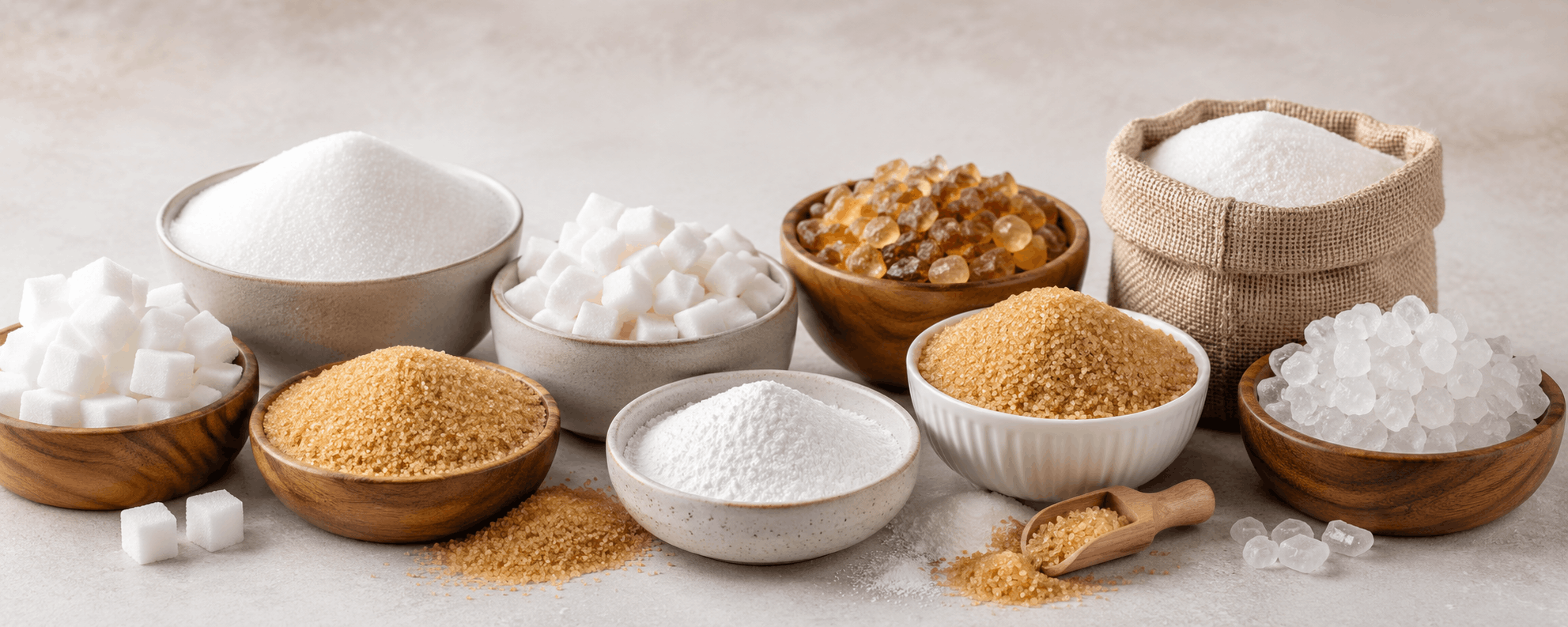
Different industries have different sugar requirements, so confirming product availability is one of the first steps in supplier evaluation. Working with a supplier that offers multiple sugar varieties also gives you greater purchasing flexibility as your product range or production needs evolve.
Ask whether they supply:
- Refined white sugar
- Raw sugar
- Brown sugar
- Organic sugar
- Specialty sugars for industrial or food manufacturing applications
For example, beverage manufacturers often prioritize high-purity refined sugar, while bakeries and confectionery producers may require brown or specialty sugars for specific formulations. Choosing a supplier with a broad product portfolio can simplify procurement by reducing the need to source from multiple vendors.
2. Which Food Safety Certifications Do You Have?
Food safety certifications demonstrate that a supplier follows internationally recognized manufacturing and quality management standards. They also provide assurance that the products are produced under controlled conditions and meet regulatory requirements.
Ask suppliers whether they hold certifications such as:
- ISO 22000
- HACCP (Hazard Analysis and Critical Control Points)
- FSSC 22000
- GMP (Good Manufacturing Practices)
Rather than accepting a simple “yes,” request current certificates and verify their validity. You should also confirm that the certifications apply to the production facility responsible for manufacturing your sugar.
3. Can You Provide Recent Quality Test Reports?
Product specifications should always be supported by documented evidence. Reliable suppliers routinely test their products and maintain records that verify compliance with customer and industry requirements.
When reviewing reports, check for:
- Sugar purity levels
- Moisture content
- ICUMSA rating
- Third-party or in-house laboratory test results
Beyond reviewing the numbers, ask how frequently testing is performed and whether reports are available for every production batch. This provides greater confidence in the supplier’s quality management process.
4. Where Is Your Sugar Sourced?
Knowing where sugar is sourced helps you evaluate supply reliability, ethical sourcing practices, and potential risks that could affect future availability. A transparent supplier should clearly explain every stage of its sourcing process.
Ask about:
- Country of origin
- Farm or mill traceability
- Sustainable and ethical farming practices
Understanding the source also helps assess factors such as seasonal production cycles, regional regulations, and geopolitical conditions that could influence long-term supply stability.
5. What Is Your Production Capacity?
Production capacity determines whether a supplier can meet both your current purchasing requirements and unexpected increases in demand. This becomes particularly important during seasonal peaks or periods of rapid business growth.
Ask about their:
- Monthly or annual production capacity
- Ability to handle recurring or high-volume orders
- Manufacturing scalability during peak demand
Also ask whether production is spread across multiple facilities or concentrated in one location. Multiple production sites can improve supply continuity if unexpected disruptions occur.
6. Can You Maintain Consistent Quality Across Orders?
Receiving high-quality sugar once is important, but maintaining the same specifications across every shipment is what builds a dependable supplier relationship. Even minor variations can affect production efficiency and product consistency.
Ask how the supplier ensures:
- Batch-to-batch consistency
- Routine quality control checks
- Incoming and final product inspections
- Standardized manufacturing processes
You can also ask how product specifications are monitored over time and what corrective actions are taken if a batch falls outside agreed quality standards.
7. What Packaging Options Do You Offer?
Packaging should protect the product while supporting efficient storage, transportation, and handling. The right packaging solution depends on your production process, storage facilities, and distribution model.
Ask whether the supplier offers:
- Retail-sized packs
- Bulk bags or industrial packaging
- Private labeling services
- Moisture-resistant packaging materials
If your business exports products or operates in humid environments, discuss packaging durability and shelf-life protection to reduce the risk of product damage during transit and storage.
8. What Is Your Minimum Order Quantity (MOQ)?
A supplier’s Minimum Order Quantity (MOQ) should align with your purchasing strategy, inventory capacity, and production requirements. An unsuitable MOQ can tie up working capital or create unnecessary storage challenges.
A lower MOQ may benefit:
- Small businesses
- Startups
- Seasonal buyers
- Companies testing a new supplier
Larger organizations often negotiate higher-volume contracts to achieve better pricing. When comparing suppliers, evaluate MOQ alongside inventory turnover, warehouse space, and forecasted demand rather than considering it in isolation.
9. What Are Your Lead Times?
Consistent lead times are essential for maintaining inventory levels and preventing production interruptions. Understanding delivery schedules also helps improve purchasing forecasts and production planning.
Ask suppliers about:
- Manufacturing timelines
- Shipping schedules
- Average delivery times
- Seasonal production or logistics delays
You should also ask whether lead times differ for customized packaging, export shipments, or high-volume orders, as these factors can influence procurement planning.
10. How Do You Handle Delivery Delays?
Unexpected disruptions can occur in any supply chain. The difference between an average supplier and an exceptional one often lies in how effectively they respond when delays happen.
Ask questions such as:
- How will you communicate delivery delays?
- Do you maintain safety stock or backup inventory?
- What contingency plans are in place for supply disruptions?
- How quickly can you recover from unexpected delays?
Suppliers with documented business continuity plans, alternative logistics partners, and proactive communication procedures are generally better prepared to minimize operational disruptions and maintain consistent customer service.
11. What Are Your Pricing Terms?
Pricing should be evaluated as part of the total cost of doing business rather than focusing solely on the quoted price. Understanding the full pricing structure helps you compare suppliers fairly and avoid unexpected expenses later.
Clarify:
- Whether pricing is fixed or market-based
- Volume discounts for larger orders
- Transportation and freight charges
- Packaging costs
- Taxes, duties, or other hidden fees
You should also ask how often prices are reviewed and whether long-term contracts include price adjustment mechanisms tied to market conditions. This creates greater budgeting certainty and supports more accurate financial planning.
12. What Payment Terms Do You Offer?
Payment terms directly affect cash flow, purchasing flexibility, and financial planning. Selecting terms that align with your procurement cycle can improve working capital without disrupting supplier relationships.
Common payment terms include:
- Letter of Credit (LC)
- Advance payment
- Net payment terms (such as Net 30 or Net 60)
In addition to payment schedules, discuss available credit facilities, accepted currencies, invoicing procedures, and any early payment discounts. Establishing clear financial expectations at the outset helps prevent misunderstandings later.
13. Can You Provide References?
Past performance is one of the strongest indicators of future reliability. Speaking with existing customers allows you to verify how the supplier performs beyond what is presented in marketing materials.
Request:
- Client references
- Customer testimonials
- Case studies
- Long-term customer relationships
When contacting references, ask about delivery performance, communication, responsiveness, and how the supplier handled unexpected challenges. These conversations often reveal insights that brochures and websites cannot provide.
14. How Do You Handle Complaints?
Even the most experienced suppliers occasionally encounter issues. What distinguishes a dependable supplier is the speed, transparency, and effectiveness of their resolution process.
Ask about:
- Complaint reporting procedures
- Response times
- Investigation process
- Product replacement or compensation policies
- Corrective and preventive actions
Also ask whether they perform root-cause analysis after resolving an issue. Suppliers that continuously improve their processes are more likely to prevent similar problems from recurring.
15. Can You Support Export Requirements?
If your business imports sugar, your supplier should understand international trade requirements and be able to manage export documentation accurately. Errors in paperwork can result in customs delays, additional costs, or shipment holds.
Confirm whether the supplier can provide:
- Export documentation
- Customs compliance support
- Certificates of origin
- Shipping documentation
- International freight coordination
You should also ask about their experience shipping to your destination market and whether they are familiar with country-specific import regulations and documentation requirements.
16. What Sustainability Practices Do You Follow?
Sustainability is increasingly becoming part of supplier evaluation, particularly for businesses with corporate responsibility goals or customer-driven sustainability commitments. Responsible sourcing can also strengthen supply chain resilience over the long term.
Ask about their commitment to:
- Ethical sourcing practices
- Water conservation initiatives
- Waste reduction and energy efficiency
- Environmental responsibility throughout production
Rather than relying on general sustainability statements, request measurable evidence such as sustainability reports, environmental certifications, or documented improvement initiatives.
17. How Do You Ensure Product Traceability?
Effective traceability systems make it possible to identify the origin and movement of products throughout the supply chain. This improves transparency, simplifies regulatory audits, and enables faster responses if quality concerns arise.
Ask suppliers how they manage:
- Batch tracking
- Production records
- Shipping and inventory documentation
- Product recall procedures
Also ask how quickly they can trace a shipment back to its production batch. Faster traceability reduces investigation time and helps minimize the operational impact of recalls or compliance reviews.
18. Do You Offer Samples?
Evaluating samples before placing a large order allows you to confirm that the product meets your technical and operational requirements. It also provides an opportunity to assess supplier responsiveness during the early stages of the relationship.
A sample order allows you to assess:
- Product quality
- Consistency
- Packaging
- Ease of handling
- Compatibility with your manufacturing requirements
Where possible, test the sample under normal production conditions to evaluate its performance in your actual manufacturing process before committing to long-term supply agreements.
19. Can You Scale With My Business?
A supplier should be capable of supporting your future business objectives, not just your current purchasing requirements. As production volumes increase or operations expand, your supplier should be able to grow alongside your business.
Discuss topics such as:
- Capacity for larger future orders
- Expansion plans
- Ability to support multiple locations
- Long-term production capabilities
If you anticipate launching new product lines, entering export markets, or opening additional facilities, confirm that the supplier has the resources and infrastructure to support those plans without affecting service levels.
20. What Makes You Different From Other Sugar Suppliers?
This question helps uncover the unique strengths that may not be obvious during a standard supplier evaluation. Instead of focusing only on price, assess the overall value a supplier brings to your procurement strategy.
Look for differentiators such as:
- Advanced quality management systems
- Dedicated account management
- Flexible packaging and logistics
- Technical support and industry expertise
- Digital order tracking
- Sustainable sourcing initiatives
- Proven experience serving similar industries
Rather than accepting broad claims, ask suppliers to support their answers with performance metrics, customer success stories, certifications, or service-level commitments. Comparing these strengths alongside commercial terms will help you identify the supplier best suited to your long-term operational goals.
Red Flags to Watch Out For
Asking the right questions is only part of the supplier evaluation process. Equally important is recognizing warning signs that may indicate future operational, quality, or service-related challenges. A trustworthy supplier should communicate openly, provide supporting documentation, and demonstrate a willingness to answer detailed procurement questions.
Be cautious of suppliers that display any of the following red flags:
- Unrealistically low prices that are significantly below market rates, as they may indicate compromised product quality, inconsistent supply, or hidden charges.
- Missing or expired certifications, making it difficult to confirm compliance with recognized food safety and manufacturing standards.
- Poor communication, including delayed responses, incomplete information, or difficulty addressing technical or commercial questions.
- No recent quality test reports or reluctance to provide laboratory results, product specifications, or supporting documentation.
- Inconsistent answers from different representatives regarding sourcing, production capacity, pricing, or delivery commitments.
- Limited transparency about manufacturing facilities, country of origin, traceability systems, or quality control procedures.
- Unclear contract terms, including vague pricing structures, undefined service commitments, or hidden fees that could create future disputes.
- No contingency planning for production interruptions, transportation issues, or emergency supply requirements.
A single concern may not automatically eliminate a supplier, but several warning signs together often indicate higher procurement risk. Choosing a supplier that values transparency, documentation, and proactive communication can help prevent costly disruptions later.
Sugar Supplier Comparison Checklist
Comparing suppliers using the same evaluation criteria creates a more objective procurement process. Instead of relying on pricing alone, assess each supplier across quality, operational capability, commercial terms, and compliance requirements to identify the best overall fit for your business.
Use the checklist below to compare potential suppliers before making your final decision.
| Evaluation Criteria | Supplier A | Supplier B | Supplier C |
|---|---|---|---|
| Food Safety Certifications (ISO 22000, HACCP, FSSC, GMP) | ☐ | ☐ | ☐ |
| ICUMSA Rating Meets Requirements | ☐ | ☐ | ☐ |
| Product Quality Test Reports Available | ☐ | ☐ | ☐ |
| Country of Origin & Traceability | ☐ | ☐ | ☐ |
| Production Capacity | ☐ | ☐ | ☐ |
| Batch-to-Batch Consistency | ☐ | ☐ | ☐ |
| Minimum Order Quantity (MOQ) | ☐ | ☐ | ☐ |
| Lead Time | ☐ | ☐ | ☐ |
| Packaging Options | ☐ | ☐ | ☐ |
| Pricing Transparency | ☐ | ☐ | ☐ |
| Payment Terms | ☐ | ☐ | ☐ |
| Customer References | ☐ | ☐ | ☐ |
| Sustainability Practices | ☐ | ☐ | ☐ |
| Product Traceability | ☐ | ☐ | ☐ |
| Export & Documentation Support | ☐ | ☐ | ☐ |
| Overall Evaluation Score | ___/ 10 | ___/ 10 | ___/ 10 |
Rather than completing the checklist once, consider using it as a standardized supplier evaluation template for every sourcing project. Recording notes, supporting documents, and scores for each criterion makes supplier comparisons more consistent, simplifies internal approvals, and creates a valuable reference for future procurement decisions.
Common Mistakes Buyers Make
Even experienced procurement teams can make costly sourcing decisions when important evaluation steps are overlooked. Avoiding these common mistakes will help improve supplier selection, strengthen operational planning, and reduce unexpected procurement challenges.
Choosing Based Only on Price
Although competitive pricing is important, selecting a supplier solely because they offer the lowest quote can create higher costs over time. Product inconsistencies, delayed deliveries, and compliance issues often outweigh any short-term savings. Consider the supplier’s overall value rather than the initial purchase price.
Ignoring Logistics
A supplier may produce excellent sugar, but inefficient logistics can still disrupt your operations. Review shipping methods, warehouse capabilities, transportation partners, and delivery performance to ensure they can consistently support your production schedule.
Skipping Supplier Audits
Whenever practical, perform a supplier audit or request detailed information about manufacturing facilities and quality management systems. Verifying processes firsthand provides greater confidence than relying solely on brochures, presentations, or website claims.
Not Checking References
Many buyers overlook customer references and focus only on product specifications. Speaking with existing clients can provide valuable insight into communication quality, delivery performance, responsiveness, and overall customer satisfaction.
Overlooking Scalability
Your supplier should be capable of supporting future growth, not just current purchasing volumes. Consider whether they have sufficient production capacity, operational resources, and infrastructure to accommodate expanding business requirements.
Failing to Review Contracts
Before signing any agreement, carefully review pricing structures, product specifications, payment terms, delivery obligations, service-level expectations, dispute resolution procedures, and contract renewal conditions. A clearly defined agreement reduces misunderstandings and establishes accountability for both parties.
Avoiding these common mistakes will strengthen your procurement strategy, improve supplier relationships, and help build a more resilient and efficient supply chain.
Why Businesses Choose Veldora as Their Sugar Supplier
At Veldora, we understand that selecting the right sugar supplier is about more than product availability; it’s about reliability, consistency, and long-term value. We work with trusted sourcing partners to deliver high-quality sugar backed by dependable supply, competitive pricing, transparent communication, and responsive customer support. Whether you’re a food manufacturer, beverage producer, bakery, or distributor, Veldora provides sourcing solutions designed to keep your operations running efficiently and your supply chain secure. Contact Veldora Now
Final Thoughts
Selecting the right sugar supplier requires balancing commercial, operational, and quality considerations rather than focusing on a single factor such as price. The strongest supplier relationships are built on transparency, consistent performance, dependable service, and the ability to support your business as its requirements evolve.
Instead of relying on sales presentations or marketing claims, evaluate each supplier using measurable criteria such as certifications, product testing, sourcing practices, logistics capabilities, payment terms, traceability, and customer experience. A structured evaluation process leads to more confident procurement decisions and helps reduce costly disruptions throughout the supply chain.
Use the questions and supplier comparison checklist in this guide whenever assessing a new wholesale sugar supplier, bulk sugar supplier, or food-grade sugar supplier. Applying the same evaluation framework across every sourcing decision will help you identify dependable partners, improve procurement consistency, and build a supply chain that supports long-term operational success.
Frequently Asked Questions (FAQs)
How do I verify a sugar supplier?
Request valid food safety certifications, recent quality test reports, customer references, product samples, and traceability records. If feasible, conduct a supplier audit to verify their manufacturing and quality control processes.
What certifications should a sugar supplier have?
Look for internationally recognized certifications such as ISO 22000, HACCP, FSSC 22000, and GMP to confirm compliance with food safety and quality management standards.
What is ICUMSA, and why is it important?
ICUMSA is a globally recognized measurement of sugar color and purity. Lower ICUMSA values generally indicate higher-quality refined sugar and greater product consistency.
What questions should I ask before buying bulk sugar?
Ask about product types, certifications, quality reports, sourcing, ICUMSA rating, MOQ, lead times, pricing, packaging, payment terms, production capacity, and customer references before making a purchasing decision.
How can I compare multiple sugar suppliers?
Use a standardized supplier comparison checklist to evaluate certifications, product quality, pricing, lead times, MOQ, packaging, sustainability practices, traceability, and customer service side by side.
What are the risks of choosing the cheapest supplier?
The lowest price may come with compromises in product quality, delivery reliability, certifications, customer support, or supply consistency, leading to higher operational costs over time.
What is a good MOQ for bulk sugar purchases?
A suitable MOQ depends on your purchasing volume, storage capacity, production schedule, and inventory strategy. Select a supplier whose MOQ supports both your operational needs and future growth.